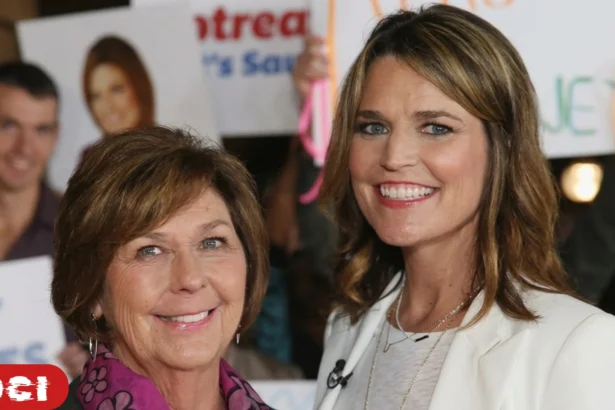

Julie Pitt Neal is the younger sister of actor Brad Pitt. However, her documented story extends beyond that famous relationship. She is married to Rob Neal, has five children, and serves as WorldServe International’s Water Ambassador to Ethiopia. Her family’s adoption journey helped draw her into clean-water advocacy. She also joined relatives in a major gift supporting pediatric cancer care in Missouri.
That concise record is more dependable than many long online profiles. Julie maintains a comparatively private life, so major gaps remain. No trustworthy public evidence confirms her exact birthday, education, occupation, or personal wealth. This biography therefore separates verified information from repetition, inference, and celebrity-blog speculation.
Who Is Julie Pitt Neal?
Julie Neal, née Pitt, belongs to a well-known American family. Her oldest brother, Brad Pitt, became an internationally recognized actor and producer. Her other brother, Doug Pitt, built businesses in Missouri and became active in humanitarian work. Julie followed a quieter public path centered on family and service.
Reliable sources identify William Alvin “Bill” Pitt and Jane Etta Hillhouse Pitt as her parents. The family raised Brad, Doug, and Julie in Springfield, Missouri. Although Brad later moved into the film industry, Springfield remained the family’s public and charitable center.
Julie appears in the public record mainly through family philanthropy. Most notably, WorldServe International identifies her as its Water Ambassador to Ethiopia. She has connected that work to her family’s adoption experience. She and her husband also participated in a substantial 2009 hospital donation.
Therefore, calling her only “Brad Pitt’s sister” gives an incomplete answer. The connection explains public curiosity, but it does not explain her documented priorities. Her clearest independent public role concerns clean-water advocacy and family-supported charitable projects.

Julie Pitt Neal Facts: What the Public Record Supports
The following table distinguishes confirmed details from qualified ones. This distinction matters because many search results copy claims without identifying an original source.
| Topic | Best-supported answer | Confidence |
|---|---|---|
| Full public name | Julie Neal; often written Julie Pitt Neal | High |
| Birth surname | Pitt | High |
| Reported birth year | 1969 | Moderate |
| Exact birthday | Not publicly confirmed | High |
| Parents | William Alvin Pitt and Jane Etta Hillhouse Pitt | High |
| Brothers | Brad Pitt and Doug Pitt | High |
| Husband | Rob Neal | High |
| Children | Five | High |
| Public service role | WorldServe Water Ambassador to Ethiopia | High |
| Entertainment career | No established acting career found | High |
| Net worth | Not verifiable from public evidence | High |
Established reporting gives 1969 as Julie’s birth year. Still, an accessible primary birth record was not located during this research. Consequently, the year should remain “reported,” not presented with an invented date or exact age.
Likewise, public sources support her marriage and motherhood. Yet responsible coverage does not require publishing every personal milestone. The useful facts concern the family’s adoption connection, Julie’s humanitarian role, and the public projects she supported.
A Springfield Childhood Outside Hollywood
The Pitt family’s story has strong Missouri roots. Brad was born while his parents lived in Oklahoma, and the family later settled in Springfield. There, Bill and Jane raised three children: Brad, Doug, and Julie.
A family-supplied obituary published by KY3 confirms that Jane and Bill raised their children in Springfield. It also describes Jane’s work in education, parent support, and community service. Those details provide reliable context for the family’s later philanthropy.
Public accounts often describe the household as religious and community-minded. However, a biographer should avoid converting broad family descriptions into detailed claims about Julie’s private beliefs. What can be observed is a pattern: the adult Pitt siblings repeatedly supported causes involving children, health, and international development.
Springfield also matters because it remained the setting for visible family projects. The pediatric cancer center bearing Jane Pitt’s name operates there. Doug’s business and charitable work also developed in the region. Julie’s public story, therefore, connects Hollywood attention with a distinctly local Missouri base.
Parents and the Pitt family’s Midwestern roots
William Alvin Pitt worked in business, while Jane Pitt worked with children and parents. Jane’s obituary says she first taught elementary school. Later, she served Springfield Public Schools through Parents as Teachers. She also volunteered and created art.
Those facts help explain why a pediatric project became a fitting family tribute. Jane’s professional and volunteer life concerned children, learning, and family support. In 2009, her children and their families helped fund a cancer center named in her honor.
Jane died on August 5, 2025, at age 84. Her family’s obituary listed Julie Neal and husband Rob among her survivors. It also emphasized Jane’s interest in Ethiopia, where several grandchildren were born. Thus, the family’s Missouri and Ethiopian connections eventually overlapped through service.
Bill and Jane’s three children entered very different public worlds. Nevertheless, available evidence shows shared charitable participation. This pattern offers a stronger insight than unsupported stories about sibling conversations or private family dynamics.
How the three siblings followed different paths
Brad chose acting and producing. Doug became an entrepreneur and public philanthropist. Julie remained much less visible, with her most clearly documented role arising through WorldServe.
These differences explain uneven search results. Thousands of reliable sources cover Brad’s career. Doug maintains public business and nonprofit profiles. Julie, by contrast, has not built a comparable media or professional archive. As a result, biography sites often fill empty spaces with assumptions.
The absence of publicity does not prove that Julie “rejected fame.” It only shows that she did not pursue a similar entertainment profile. Careful language matters here. A writer can reasonably describe her as private, but should not invent motives or hidden opinions.
Moreover, the siblings’ public service creates a genuine point of connection. Julie’s Ethiopia work, Doug’s international projects, and the family’s Missouri hospital support all involve practical needs. Their paths differ, yet their public record intersects around giving.
Julie Pitt Neal Husband and Family Life
Julie is married to Rob Neal. The family obituary shared publicly in 2025 identifies them as a married couple in Springfield. Reputable 2024 coverage also reported that they had been married for more than three decades.
The couple has five children. Public sources describe three biological children and two sons adopted from Ethiopia. However, their children should not become objects of unnecessary celebrity attention. Their relevance here lies in understanding how adoption influenced Julie’s later advocacy.
Marriage dates, private celebrations, and household finances remain outside the dependable record. Some biography pages attach occupations and business titles to Rob. Yet those claims lack strong sourcing. This article therefore identifies him only through verified family and charitable contexts.
Julie has spoken publicly about motherhood and adoption through WorldServe. Those comments show that the choice involved the whole household. They also show how an intimate family decision opened a wider awareness of unequal access to basic resources.
What is publicly confirmed about Rob Neal
Rob Neal is Julie’s husband and the father of their family. Contemporary coverage of the 2009 hospital contribution names “Rob and Julie Neal” among the donors. That detail places both spouses within a documented charitable action.
Beyond that, caution is appropriate. Search results describe Rob as a consultant, community worker, teacher, or businessman. Yet reviewed primary and authoritative sources do not clearly establish those specific titles. Repetition across blogs does not turn a claim into evidence.
The marriage itself appears long-standing. Still, no reliable source reviewed here provides a precise wedding date. Saying “married for more than 30 years,” with attribution to established reporting, is safer than guessing a year.
This limited treatment respects the couple’s privacy. It also keeps the article useful. Readers can understand Rob’s place in Julie’s family and public service without unsupported career claims.
Motherhood, adoption, and responsible reporting
Julie and Rob’s family includes five children. Their two adopted sons were born in Ethiopia. Julie has explained that adoption changed her awareness of needs beyond her immediate community.
The WorldServe interview about her children gives the strongest first-person context. In it, she discusses the family’s decision to adopt and their later effort to support a clean-water well connected to her son’s birthplace. That testimony links motherhood directly to service.
However, adoption reporting requires care. Children are not proof of a celebrity family’s generosity, and their histories are not public property. A responsible biography focuses on Julie’s own stated learning and subsequent advocacy. It avoids medical, school, and private social details.
This approach also produces a more meaningful story. Adoption did not merely expand a family. It created a durable relationship with communities in Ethiopia and influenced Julie’s public humanitarian focus.
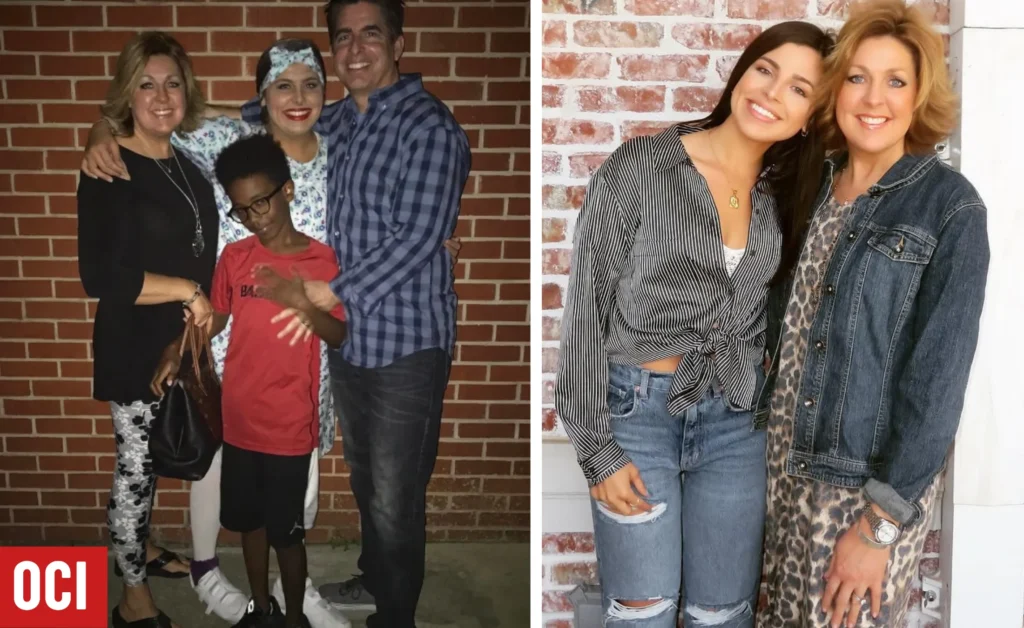
How Adoption Connected Julie Pitt Neal to Ethiopia
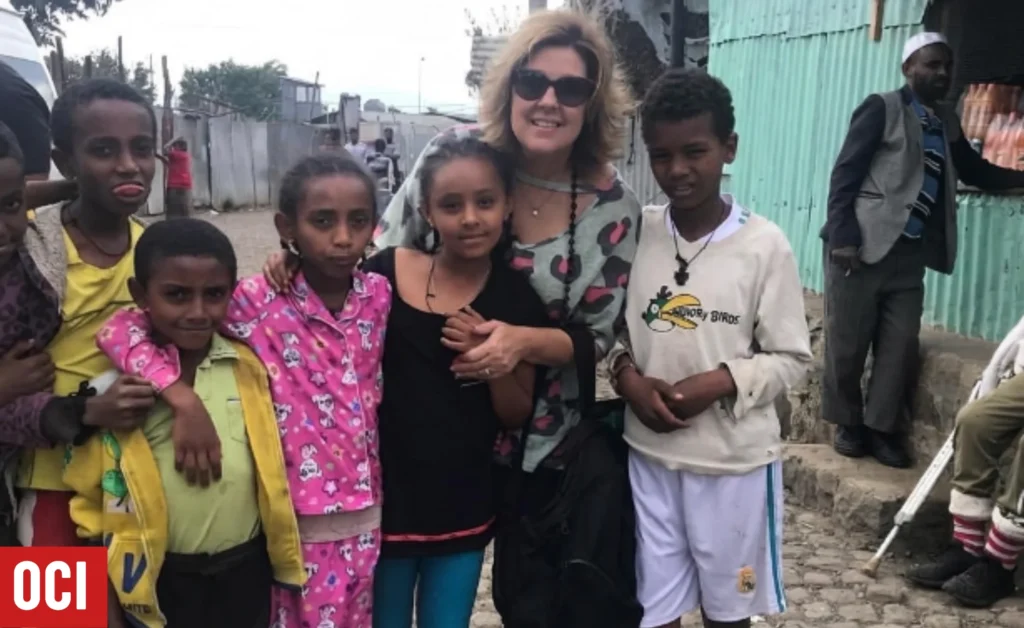
Julie’s most important documented public work begins with Ethiopia. After her family adopted there, she returned with a deeper understanding of local water challenges. Her response developed into a relationship with WorldServe International.
WorldServe works on water access and related development needs in East Africa. Its materials identify Julie as the organization’s Water Ambassador to Ethiopia. Unlike vague blog descriptions, that is an official organizational title.
Julie’s own account makes the sequence clear. First came a family decision to adopt. Then came travel, relationships, and awareness. Subsequently, she supported efforts to bring clean water to communities connected with her family’s journey.
This progression gives her biography a distinct center. Her public value does not depend on entertainment credits. Instead, it rests on translating a personal experience into sustained attention for a basic human need.
The family decision to adopt
Julie has described living within a comfortable local “bubble” before adoption broadened her view. She said the family believed it had space and love to share. Importantly, she also indicated that the existing children supported the decision.
The household first welcomed one son from Ethiopia and later another. Exact private circumstances do not need retelling. What matters is that the family maintained a connection with Ethiopia after the legal adoption process ended.
Many online profiles claim Brad Pitt inspired Julie’s adoption. That theory may appear plausible because Brad and Angelina Jolie also adopted a child born in Ethiopia. Nevertheless, similarity is not proof of causation. Julie’s available first-person account grounds the decision in faith and family, not celebrity imitation.
Therefore, this article does not credit Brad with causing the adoption. It lets Julie’s own explanation stand. That choice improves both accuracy and respect.
From a personal journey to clean-water advocacy
Access to safe water shapes health, education, work, and personal safety. In many communities, women and children spend significant time collecting water. Unsafe sources also increase exposure to preventable disease.
WorldServe presents water infrastructure as a foundation for broader community development. Julie’s ambassador role helps connect donors and audiences with projects in Ethiopia. The role appears public-facing and advocacy-based rather than a claim of technical engineering expertise.
That distinction prevents exaggeration. Julie should not be described as personally drilling every well or managing all field operations. Instead, she lends attention, testimony, and fundraising support to the organization’s mission.
Her personal connection can make distant needs easier for audiences to understand. Moreover, it shows how family experience can lead to continuing civic participation. The outcome is more substantial than a single celebrity appearance.
Julie Pitt Neal Charity Work With WorldServe
The WorldServe International campaign page explicitly calls Julie Pitt Neal its Water Ambassador to Ethiopia. It connects her with campaigns involving clean water, sanitation, and dignity for women and girls.
That official description supports a narrow but meaningful conclusion. Julie has a recognized advocacy role within the organization. It does not prove every broader claim attached to her by biography websites.
WorldServe is a registered nonprofit organization. Its work centers on sustainable water access in East Africa. Julie’s involvement provides a bridge between her family’s Ethiopia story and the organization’s public outreach.
Her mother, Jane, publicly praised Julie’s work in Ethiopia. That family recognition appeared in WorldServe material and later established reporting. Still, the most valuable evidence comes from the organization’s direct identification and Julie’s own recorded account.
What a Water Ambassador does
“Water Ambassador” can sound like a formal diplomatic title, but it is not a government office. In this context, it describes an advocate connected with a nonprofit mission. Ambassadors typically raise awareness, encourage support, tell project stories, and help campaigns reach new audiences.
Julie’s public visibility likely helps WorldServe reach people who recognize the Pitt family. Yet her credibility also comes from direct family ties to Ethiopia. She speaks as an adoptive parent who returned attention to the communities behind that journey.
The title should not be inflated into executive management. No reviewed source establishes Julie as WorldServe’s chief executive, field director, or water engineer. Clear wording protects the organization’s professionals while accurately recognizing her contribution.
Consequently, the best description is simple: Julie advocates for clean-water work in Ethiopia as a WorldServe ambassador. This statement is both verifiable and meaningful.
Why clean water changes more than health
Clean water reduces exposure to waterborne illness. Additionally, nearby access can reduce the time families spend collecting water. That saved time may support school attendance, work, caregiving, and community life.
Sanitation and menstrual-health programs also affect dignity and participation. WorldServe’s Julie-related campaign material links water access with support for women and girls. The connection demonstrates why water programs rarely concern drinking water alone.
However, humanitarian writing should avoid portraying communities only through need. Effective programs depend on local knowledge, maintenance, and long-term partnership. Celebrity visibility can attract attention, but communities and field teams sustain the work.
Julie’s story offers an accessible entry point into these issues. Readers arrive because of her family name. Ideally, they leave with a clearer understanding of why reliable water systems matter.
The Pitt Family’s $1 Million Hospital Gift
In June 2009, members of the Pitt family announced a $1 million donation connected with pediatric cancer care in Springfield. Contemporary coverage named Brad Pitt and Angelina Jolie, Doug and Lisa Pitt, and Rob and Julie Neal among the participating family members.
UPI’s contemporaneous report described the gift to St. John’s Hospital. A detailed account from CURE said the donation helped open a pediatric cancer center honoring Jane Pitt.
This event matters for Julie’s biography because it provides hard evidence of collective family philanthropy. It also connects Jane’s work with children to a lasting local institution.
Unlike uncertain lifestyle claims, the donation was publicly announced at the time. Its purpose and participants can therefore be described with high confidence.
What the 2009 donation funded
The gift established an endowment intended to help recruit pediatric cancer specialists. Reporting at the time said the project would bring the region its first pediatric hematologist-oncologist. The broader expansion also involved children’s services and hospital facilities.
The center developed within a relationship with St. Jude Children’s Research Hospital. That affiliation allowed eligible patients to access specialized protocols closer to home. Consequently, some families could avoid additional travel during already difficult treatment periods.
The family named the center for Jane Pitt. This honor linked her concern for children with a concrete healthcare resource. Moreover, the gift represented cooperation among all three siblings and their families.
Julie’s role should neither be erased nor exaggerated. She was one participant in a family contribution. The public evidence supports that specific credit.
The center’s continuing public value
The institution still operates as the Mercy Jane Pitt Pediatric Cancer Center. Mercy says the center serves children in southwest Missouri and northern Arkansas through pediatric hematology and oncology care.
This continuing operation gives the 2009 story unusual depth. The donation was not merely a ceremonial headline. It helped support an institution that remains part of regional care.
Mercy also describes a family-friendly setting and assistance with insurance issues. Those services address practical burdens that accompany childhood cancer. Therefore, the center’s value includes clinical care and support for families navigating complex systems.
For Julie’s profile, this outcome provides measurable context. Her public service includes participation in a project whose institutional legacy can still be verified.
Julie Pitt Neal and Brad Pitt: A Family Connection, Not a Career
Search interest in Julie largely exists because Brad Pitt is her brother. That relationship is factual and relevant. However, it should not transform Julie into an entertainment figure by default.
No reviewed evidence establishes a sustained acting, producing, or media career. IMDb pages can aggregate appearances, archival material, or news mentions. They do not necessarily prove that someone works professionally in entertainment.
Brad’s fame also creates a temptation to interpret Julie’s choices through him. Articles describe her as rejecting Hollywood, following Brad’s adoption example, or deliberately choosing ordinary life. These statements may sound appealing, yet public evidence rarely supports such personal motives.
A stronger comparison stays observable. Brad developed a global film career. Julie maintained a smaller public footprint and became visible through family and nonprofit activity. Their relationship explains the search query, but their careers should not be merged.
This distinction also restores agency. Julie’s clean-water work has its own documented origin in her family’s Ethiopia experience. It deserves explanation without constant reference to red carpets or celebrity wealth.

What Remains Private or Unconfirmed
A trustworthy biography must show its limits. Julie has not published a comprehensive official biography, and authoritative records cover only selected events. Therefore, many common questions cannot receive precise answers.
The gaps include her exact birthday, birthplace, formal education, occupation, wedding date, income, assets, and net worth. Some sites provide confident answers, but confidence is not evidence. Without an original record or reliable attribution, those details remain unconfirmed.
Privacy itself is not suspicious. Julie is related to a public figure, but that relationship does not create an obligation to disclose finances or personal history. Responsible reporting answers what it can and labels what it cannot.
This method also protects readers. A clear “not publicly confirmed” is more useful than a fabricated fact that travels across dozens of copied articles.
Birth date, education, and career claims
Established coverage reports that Julie was born in 1969 and was the youngest Pitt sibling. However, no reliable source reviewed here confirms an exact day and month. Accordingly, an exact current age can change and should not be asserted without qualification.
Several websites name Shawnee, Oklahoma, as her birthplace. Others imply Springfield. The family’s movements make either claim superficially plausible, but no suitable primary evidence settled the question. The safest wording says she grew up in Springfield.
Likewise, claims that Julie worked as a preschool teacher appear online. Yet accessible authoritative documentation did not verify that occupation. It may be true, but this article will not present it as established fact.
No dependable source identifies a college degree. Consequently, education claims should remain absent until a direct or institutional source supports them.
Why Julie Pitt Neal net worth estimates are unreliable
No public financial disclosure establishes Julie’s personal net worth. She does not run a widely documented public company, hold a disclosed entertainment contract, or publish audited personal accounts. Therefore, exact figures online are speculative.
Family wealth cannot simply be divided among relatives. Brad Pitt’s earnings belong to his own financial history. A sibling relationship does not prove shared ownership, trusts, gifts, investments, or liabilities.
Moreover, charitable participation does not reveal personal wealth. A family gift may combine several donors, entities, and arrangements. The 2009 hospital donation proves support for the project, not Julie’s individual balance sheet.
The accurate answer is straightforward: Julie Pitt Neal net worth is not publicly verifiable. Any precise estimate should be treated as unsupported unless future financial documents provide evidence.
Timeline of Julie Pitt Neal’s Documented Public Story
This timeline uses only events supported by credible reporting. It avoids invented childhood milestones and unsupported career dates.
| Period | Documented event | Why it matters |
| 1969 | Reported birth year | Places Julie as the youngest Pitt sibling |
| Childhood | Raised in Springfield with Brad and Doug | Establishes the family’s Missouri roots |
| Adulthood | Married Rob Neal and raised five children | Confirms her immediate family context |
| Before June 2009 | Adopted two sons from Ethiopia | Created a lasting personal connection with Ethiopia |
| June 2009 | Joined the family’s $1 million hospital gift | Shows documented local philanthropy |
| 2010s | Spoke through WorldServe about adoption and water | Connects personal experience with advocacy |
| 2020s | Identified as WorldServe’s Water Ambassador to Ethiopia | Confirms an ongoing public-service role |
| August 2025 | Mother Jane Pitt died at 84 | Family obituary confirmed relationships and legacy |
The timeline is intentionally short. A longer list would require padding gaps with rumor. Instead, these events show a coherent development from family life to public advocacy.
They also reveal two geographic anchors. Springfield represents childhood, family, and pediatric healthcare. Ethiopia represents adoption, relationship, and clean-water service. Together, those places explain more about Julie’s public record than celebrity comparisons do.
Why Her Story Matters Beyond Celebrity
Julie’s story illustrates a common problem in online biography publishing. A private relative of a celebrity attracts strong search interest but leaves a limited public record. Low-quality pages then manufacture certainty to satisfy every query.
A better profile accepts uncertainty. It can still offer valuable information by organizing verified facts, tracing cause and effect, and explaining why specific projects matter. In Julie’s case, adoption led to deeper engagement with Ethiopia, while family values found expression in Missouri healthcare support.
The story also demonstrates different kinds of influence. Brad’s influence comes through film and global recognition. Julie’s documented influence appears through advocacy, family participation, and nonprofit visibility. One is larger publicly, but scale alone does not determine meaning.
Finally, her profile directs attention toward institutions. WorldServe’s water programs and Mercy’s pediatric cancer center matter because they serve communities. Julie’s name can bring readers to those subjects, yet the organizations and local partners perform the sustained work.
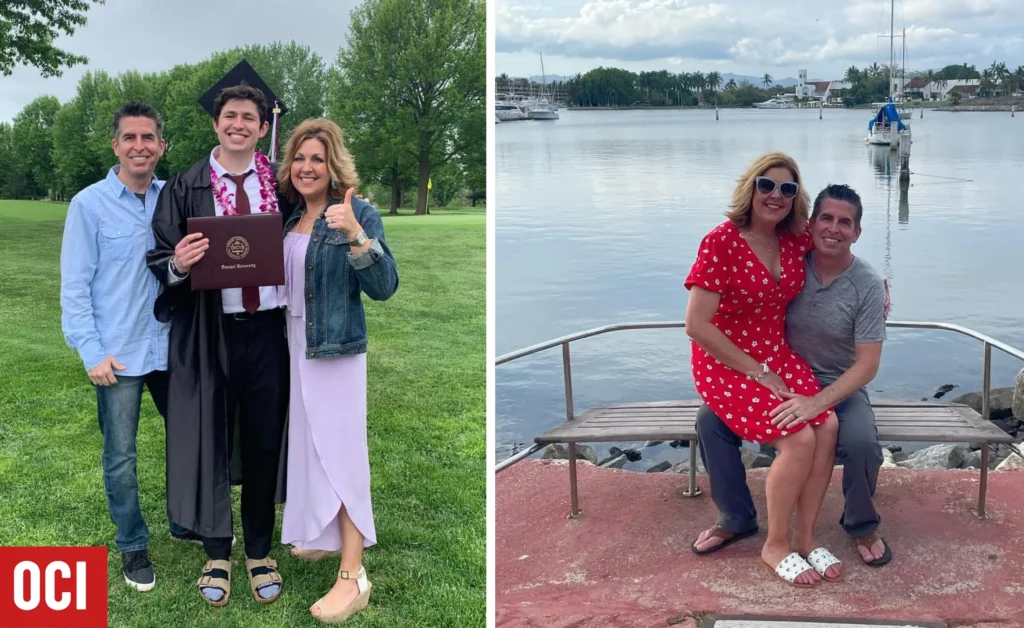
Frequently Asked Questions About Julie Pitt Neal
1. Who is Julie Pitt Neal?
Julie Pitt Neal is Julie Neal, née Pitt. She is the younger sister of Brad and Doug Pitt. She is also married to Rob Neal, has five children, and serves as WorldServe International’s Water Ambassador to Ethiopia.
2. How is Julie Pitt Neal related to Brad Pitt?
She is Brad Pitt’s younger sister. Brad is the oldest of the three Pitt siblings, followed by Doug and Julie. The family grew up in Springfield, Missouri.
3. Who is Julie Neal’s husband?
Julie’s husband is Rob Neal. Public reporting says their marriage has lasted more than three decades. However, a precise wedding date is not reliably documented.
4. How many children does Julie Neal have?
Julie and Rob have five children. Public sources describe three biological children and two sons adopted from Ethiopia. This article limits further personal details to protect family privacy.
5. Did Julie Neal adopt children from Ethiopia?
Yes. Julie has discussed her family’s Ethiopian adoption journey through WorldServe. She connected that experience with later support for clean-water work in Ethiopian communities.
6. What charity work does Julie Neal do?
WorldServe identifies Julie as its Water Ambassador to Ethiopia. She raises awareness around clean-water access. She also joined relatives in the 2009 gift supporting the Jane Pitt Pediatric Cancer Center.
7. Is Julie Neal an actress?
No reliable evidence establishes a professional acting career. IMDb mentions do not automatically prove that someone works as an actor. Her documented public role centers on family and philanthropy.
8. How old is Julie Neal?
Established reporting gives 1969 as her birth year. However, her exact birth date is not reliably confirmed. Therefore, articles should avoid presenting a precise age as permanently fixed.
9. What is Julie Pitt Neal net worth?
Julie Pitt Neal net worth is not publicly verifiable. No reliable financial disclosure supports the exact numbers circulated by biography websites. Brad Pitt’s wealth cannot be treated as evidence of Julie’s assets.
10. Where does Julie Neal live?
Reliable family reporting connects Julie and Rob with Springfield, Missouri. For privacy, a biography should not publish a street address or more precise location.
Conclusion: Julie Pitt Neal in Her Own Context
Julie Pitt Neal is Brad Pitt’s younger sister, but that fact is only the starting point. The verified record presents a wife, mother of five, adoptive parent, clean-water advocate, and participant in a lasting Missouri healthcare project.
Her family’s Ethiopian adoption journey helped inspire work with WorldServe International. Meanwhile, the Pitt family’s 2009 donation supported a pediatric cancer center that continues serving regional families. These are concrete contributions, not speculative personality claims.
Much of Julie’s life remains private. Her exact birthday, education, occupation, and personal net worth are not reliably established. Respecting those limits makes the biography more accurate, not less complete. Ultimately, Julie Pitt Neal’s public story is best understood through family, service, and the institutions her advocacy has helped bring into view.
Read more at Official Celeberity Info